From 50 seconds to 10: the morning rush problem
A busy café can pre-batch espresso on the CAYE Smart X and serve a latte in about 10 seconds instead of 50, without giving up the consistency that made them buy an automatic machine in the first place. This case study explains where the idea came from, how the workflow runs, and what it means for speed, quality and wages.
Every café owner knows the 7:30am queue. Commuters want their flat white now, the docket rail is full, and one slow minute at the machine turns into five minutes at the door. Some of those customers simply walk to the next café.
The CAYE Smart X already helps a lot here. From the push of a button, the machine grinds, doses, tamps, weighs and extracts a shot in roughly 35 to 40 seconds, then textures the milk automatically. One or two coffees are in the cup in under a minute. That is faster than a traditional setup, where a barista grinds, distributes, tamps, locks in the group handle, pulls the shot and steams the milk by hand.
But for the busiest sites (station kiosks, hospital cafés, office lobbies, university campuses, takeaway windows) customers keep asking us one question: can it go faster still? This case study is our answer.
Why cafés are choosing the CAYE Smart X
Before we talk about speed, it is worth saying why café owners are coming to talk to us about the CAYE Smart X automatic espresso machine in the first place. Two reasons come up in almost every conversation.
The same cup, every time. The CAYE controls the variables that usually drift during a shift: dose, grind, extraction time, pressure and milk temperature. A recipe is set once and repeated exactly. In our demo recipe the espresso runs at 21.0g, 30.5 seconds and 8.1 bar, and it stays there whether it is the first coffee of the day or the four hundredth. Your regulars get the coffee they love, no matter who is on the bar.
Fewer hours on the machine. Because the CAYE handles grinding, dosing, tamping, extraction and milk texturing, you do not need a highly trained barista on the machine for every shift. One team member can run coffee and still help with orders, food or the register. For many cafés, that means fewer rostered hours and a lower wage bill, and less risk when a key barista calls in sick or moves on.
Consistency and labour savings are already a strong case. Speed in the peak hour was the last piece we wanted to solve, and the answer came from a visit to one of Melbourne’s best specialty cafés.
What we learned at Ona Coffee in Brunswick
On a recent visit to Ona Coffee in Brunswick, we got talking with the barista about how they keep up with the morning rush. Their answer was simple and clever: they pre-batch espresso.
Early in the day, the team extracts espresso into glass containers. Each container is fitted with a push-button dispenser, the kind often sold for wine, that pours a set volume at the press of a button. When an order comes in, the barista presses the button and the espresso is in the cup in about a second. Milk is textured automatically in a jug and poured straight on top, with latte art and all.
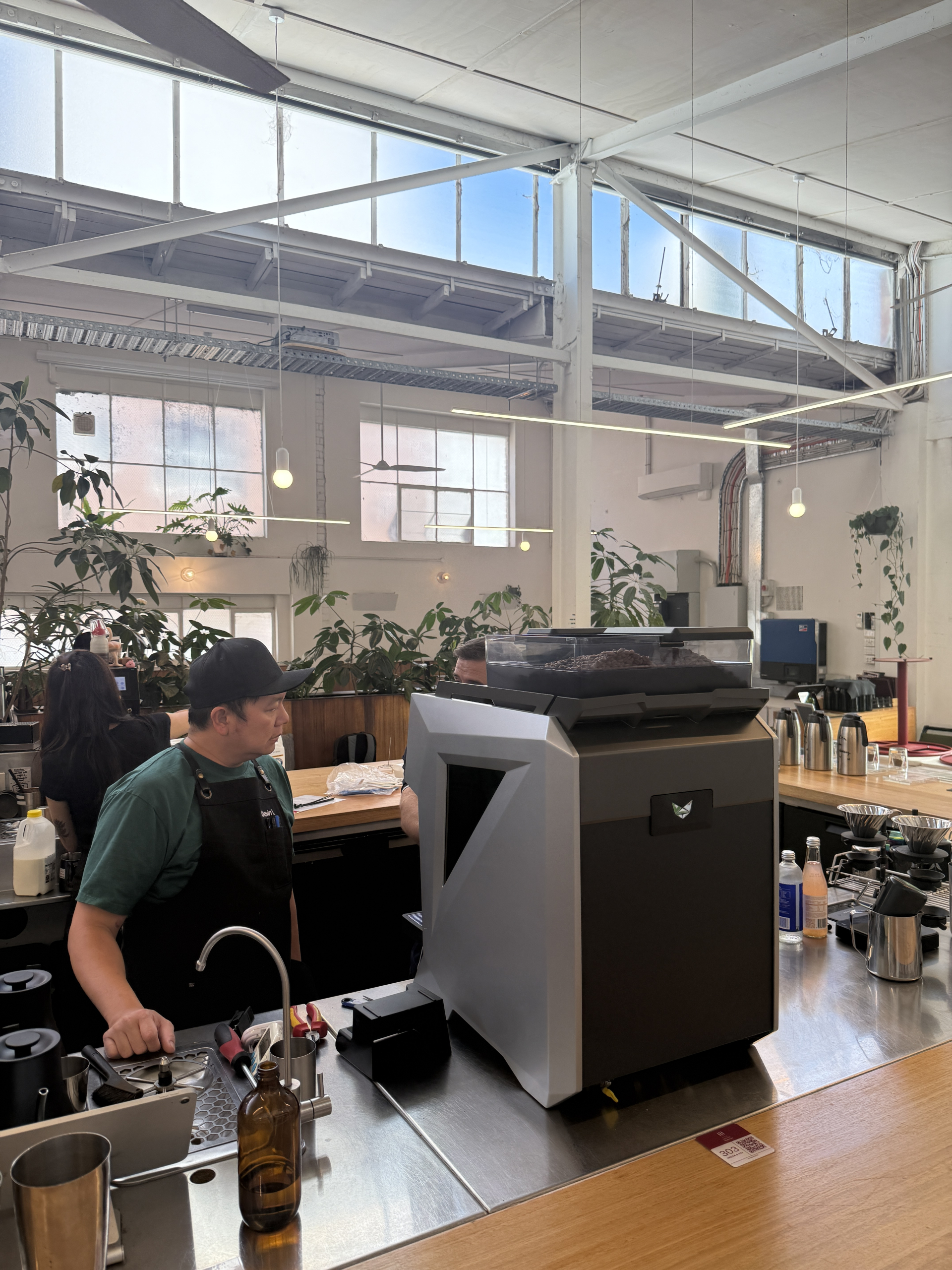
Ona Coffee cafe in Brunswick Melbourne
Three things stood out to us.
- Speed. Pouring a shot takes a second, not 30. The bottleneck at the espresso machine simply disappears.
- A smoother taste. When many shots rest together in a container, the crema settles and dissolves into the coffee. With it goes much of the sharp bitterness you can taste in a black coffee straight from the group head. The result is a rounder, smoother espresso that works beautifully under milk.
- The cup is about 90% the same. In a milk coffee, most customers would not pick the difference from a freshly pulled shot. The one real trade-off is temperature: the batched espresso is cooler than a fresh one, so the finished drink can be a little cooler too.
That temperature trade-off is exactly where the CAYE Smart X comes in.
How to pre-batch up to 300 espressos with the CAYE Smart X
Pre-batching by hand means a barista pulling shot after shot before opening, which is time and wages most cafés cannot spare. The CAYE removes that work. Its recipe settings include a Beverage count that can be set anywhere from 1 to 300 cups, so one press of a button extracts every shot automatically, one after another, to the same recipe.
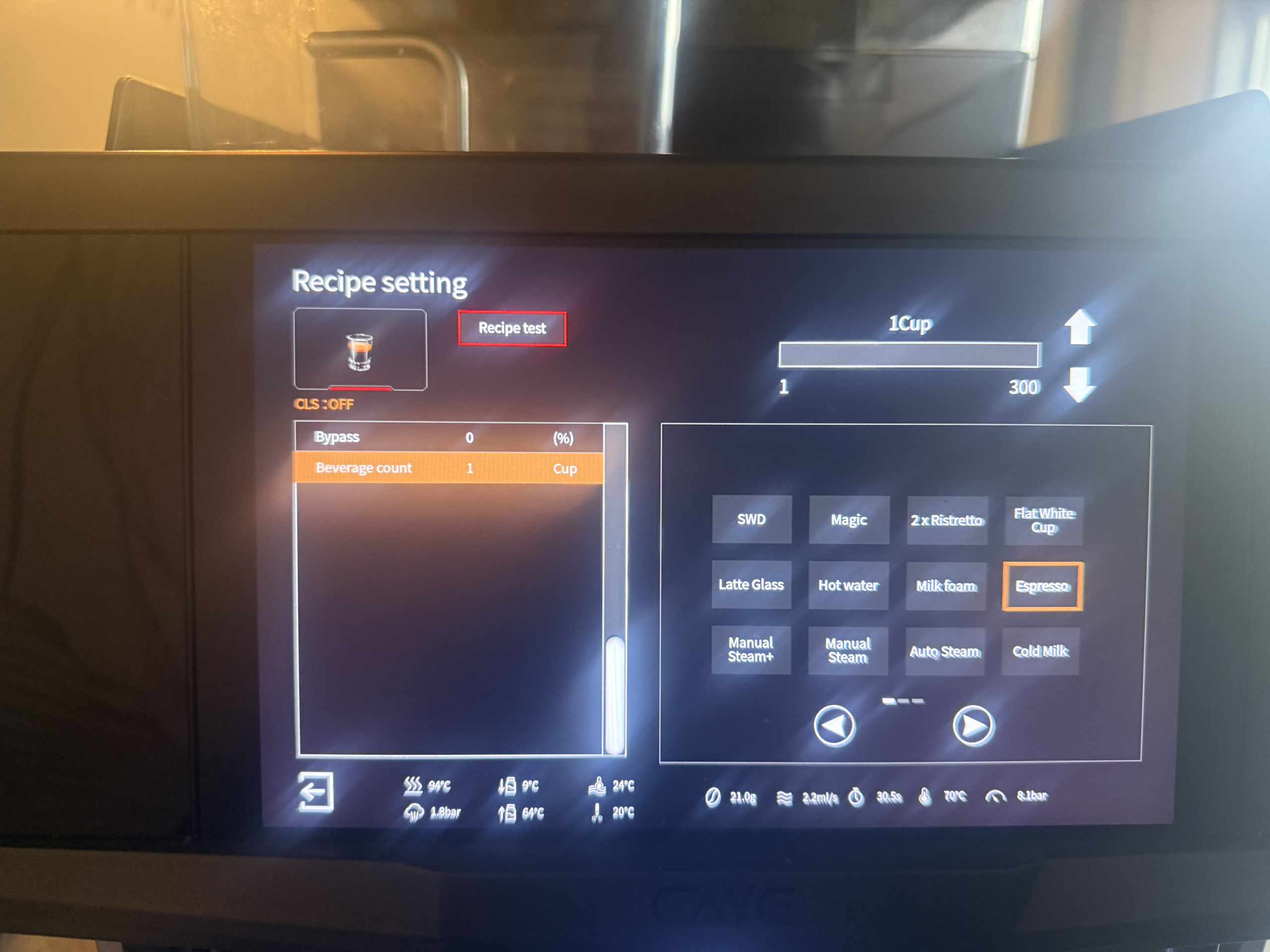
CAYE recipe screen showing Beverage count (1 to 300)
Here is the morning workflow.
- Fill the bean hopper. Load enough beans for the batch you plan to make.
- Set the beverage count. In the CAYE recipe menu, select the Espresso button and set the Beverage count to the number of shots you need, up to 300.
- Place a large container under the spout. Use a clean, food-safe glass container big enough for the full batch.
- Press Espresso and walk away. The CAYE grinds, doses, tamps and extracts every shot to the same recipe while your team sets up the rest of the café. Each shot still takes around 35 to 40 seconds, so a batch of 100 is roughly an hour of unattended running: start early, or batch in rounds through the morning.
- Fit a dispenser. When the batch is done, decant into serving bottles and fit a push-button dispenser that pours a set volume per press.
- Serve. For each order, press the dispenser for the espresso, then top with milk from the CAYE.
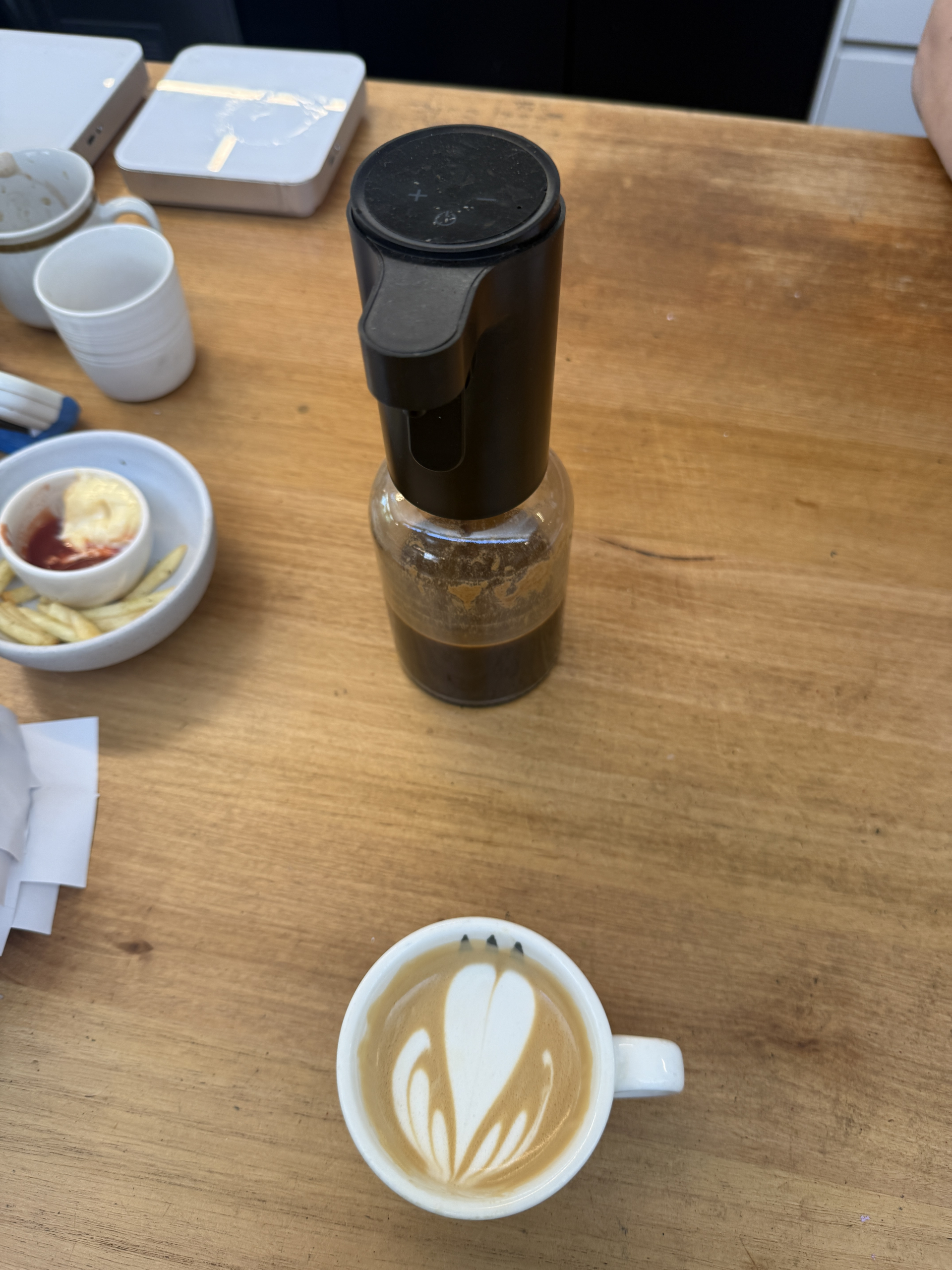
espresso batch in a glass bottle with push-button dispenser.
About the dispenser. You do not need special equipment. A low-cost electric wine or drinks dispenser with an adjustable pour volume, widely available online, does the job. Pelican Rouge does not sell or endorse any particular dispenser; any food-safe model that pours an accurate, repeatable volume will work.
A note on handling. Treat batched espresso like any other prepared food. Batch only what you will use in the service window, keep containers clean and covered, and check your local food safety requirements for how long it can be held.
Hotter milk, so the coffee comes out right
The one weakness of batched espresso is temperature, and the CAYE fixes it at the milk. The CAYE can texture milk up to 75°C without breaking down the microfoam, so the milk stays silky and pourable for latte art. Hotter milk balances the cooler espresso, and the finished latte or flat white reaches the customer at the temperature they expect.
Put the two together and the drink comes together in about 10 seconds: a press of the dispenser for the espresso, then hot, textured milk from the CAYE on top.
The numbers: how much time you save
| Setup | Time per milk coffee (approx.) | Who makes it |
|---|---|---|
| Traditional machine, grinder and tamper | Over a minute, depending on the barista | A trained barista for every step |
| CAYE Smart X, shot on demand | About 50 seconds (35 to 40s shot, then milk) | Any trained team member |
| CAYE Smart X with pre-batched espresso | About 10 seconds | Any trained team member |
Going from 50 seconds to 10 is five times faster per drink. Over a 30-cup rush, that is roughly 20 minutes of machine time saved, enough to clear a queue that would otherwise walk away. And because the batch was made by the same CAYE recipe, every cup is just as consistent as a shot pulled on demand.
Is pre-batching right for your café?
Pre-batching fits best where volume is high and the rush is predictable:
- Takeaway-heavy cafés and kiosks with a sharp morning peak
- Hospitals, universities, offices and transport hubs
- Event, catering and stadium coffee
- Any café that has lost customers to the queue
It does not have to be all or nothing. Many sites will pre-batch for the 7am to 9am peak and pull fresh shots on demand for the rest of the day, all on the same machine.
Frequently asked questions
Does pre-batched espresso taste worse? In a milk coffee, it is about 90% the same as a fresh shot, and many people find it smoother because the crema and its bitterness settle into the batch. Black coffee drinkers who want a fresh crema can still get a shot on demand.
How many shots can the CAYE Smart X batch? The Beverage count in the recipe settings goes from 1 to 300 cups per press.
Do I need special dispensing equipment? No. A low-cost, food-safe push-button dispenser with an adjustable pour volume is enough. We do not sell or endorse any brand.
Won’t the coffee be cold? The batch is cooler than a fresh shot, so the CAYE textures milk hotter, up to 75°C, without spoiling the texture. The finished drink lands at a normal serving temperature.
Will this reduce my wage bill? The CAYE already reduces the need for a dedicated barista on the machine. Pre-batching takes it further, because one person can serve far more drinks per hour in the peak.
See it working in your café
Consistency and lower wages are why café owners choose the CAYE Smart X. Pre-batching adds the third piece: a latte in about 10 seconds when the queue is out the door. It costs little to set up and uses the machine you already have.
Learn more about the CAYE Smart X and CAYE Technologies, or contact the Pelican Rouge team to book a demonstration and see the pre-batch workflow running for yourself.